
Cervical Facet Joint Fixation
When the small articulation joints of the neck lose their natural fluid glide, neck rotation feels locked, tight, or "creaky."
Mechanical neck pain is frequently caused by cervical joint restriction, postural strain ("tech-neck"), and muscular tension. Dr Surinder Sandhu at Bedford Chiropractic Clinic uses evidence-based cervical adjustments, gentle joint mobilisation, and postural correction to alleviate neck stiffness and restore natural range of motion.
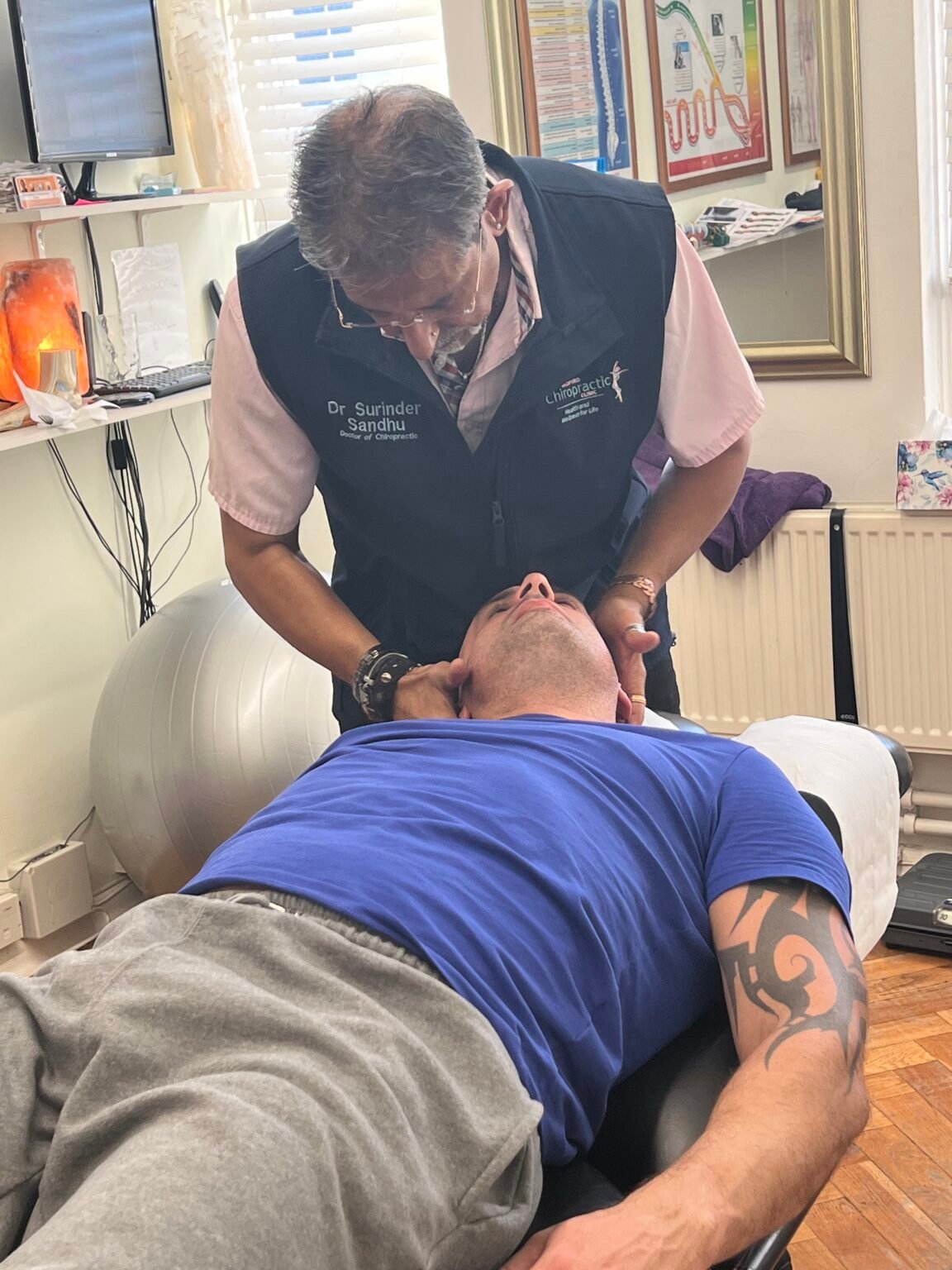
The human head weighs approximately 4.5 to 5.5 kg in an upright, neutral position. However, when we tilt forward over smartphones, laptops, or steering wheels, the mechanical load placed on the cervical spine increases significantly.
Over time, this continuous forward-head carriage causes the deep stabilising muscles of the neck to tire, forcing the upper trapezius and levator scapulae muscles into chronic contraction. The result is a familiar combination of aching shoulders, restricted head turning, and persistent base-of-skull tension.
When the small articulation joints of the neck lose their natural fluid glide, neck rotation feels locked, tight, or "creaky."
Prolonged screen use leads to muscle strain, rounded shoulders, and upper back tightness.
Irritated cervical joints frequently refer dull, aching pain across the tops of the shoulders and between the shoulder blades.
Joint restrictions in the upper three cervical vertebrae can refer tightness into the occipital area, contributing to tension-type discomfort.
Your neck houses delicate neural pathways and vascular structures. We prioritise clinical safety through careful assessment:
Precise measurements of neck flexion, extension, lateral flexion, and rotation.
Testing sensory dermatomes, deep tendon reflexes, and muscle strength in the arms and hands to ensure nerves are functioning normally.
Gentle, hands-on assessment of individual cervical vertebrae to identify localised restrictions, joint sensitivity, and muscle trigger points.
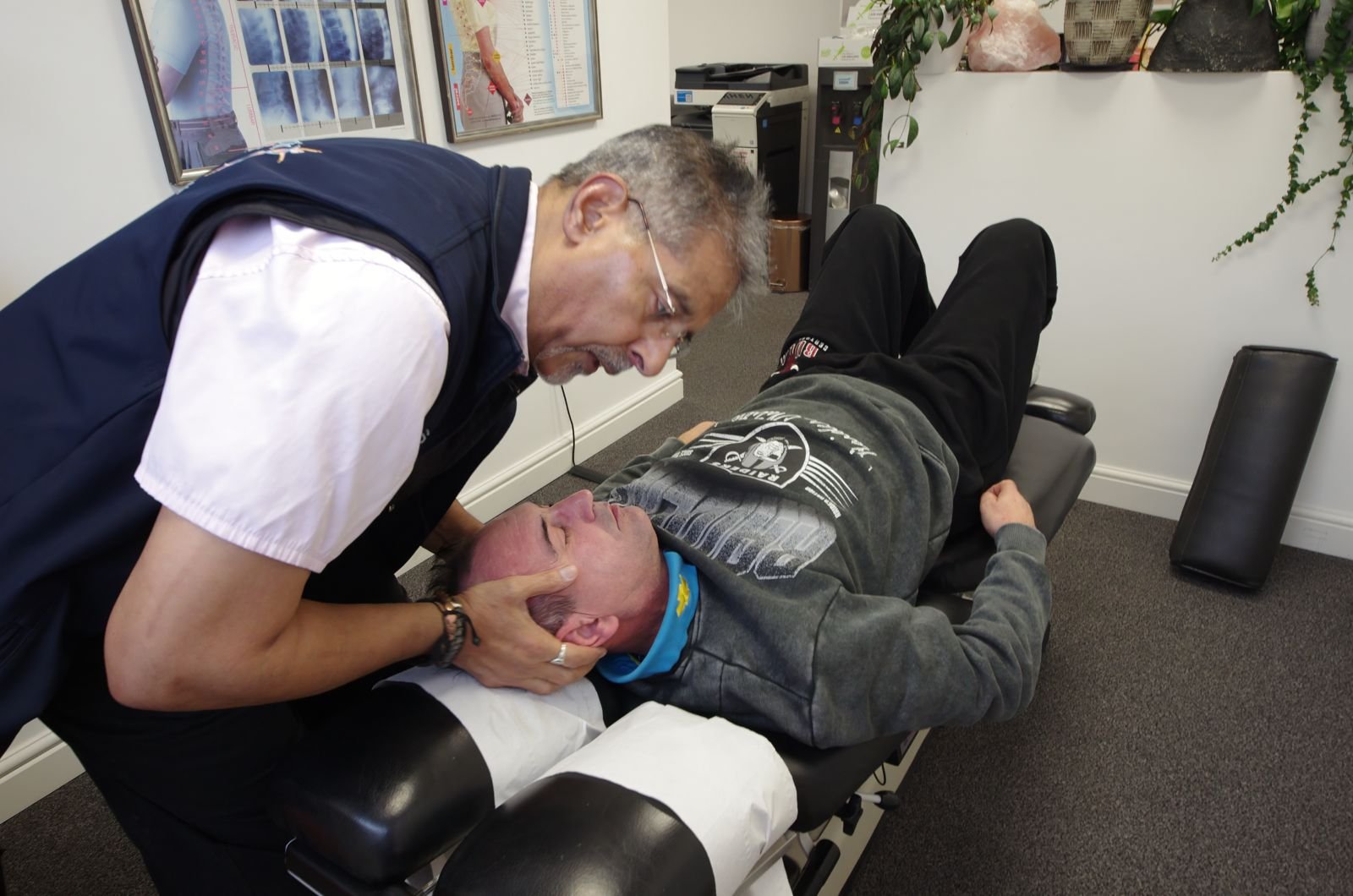
Following your £49 consultation, care may involve gentle, low-force techniques matched to your comfort level:
For patients who prefer not to experience manual "cracking" or rotational adjustments, gentle instrument-assisted methods deliver light, targeted impulses to restore joint mechanics.
Precision, high-velocity, low-amplitude (HVLA) adjustments designed to restore smooth articulation to stiff cervical joints.
Practical adjustments for desk height, monitor levels, and driving ergonomics to support healthy neck posture.