
Lumbar Disc Bulges & Protrusions
When an intervertebral disc bulges outward, it can compress adjacent spinal nerve roots, sending radiating pain down the leg.
Sciatica is a condition characterised by irritation or compression of the sciatic nerve, causing radiating pain, numbness, or tingling down the leg. Bedford Chiropractic Clinic provides targeted clinical evaluations, non-surgical spinal mobilisation, and pelvic rebalancing to relieve nerve pressure and restore pain-free walking.
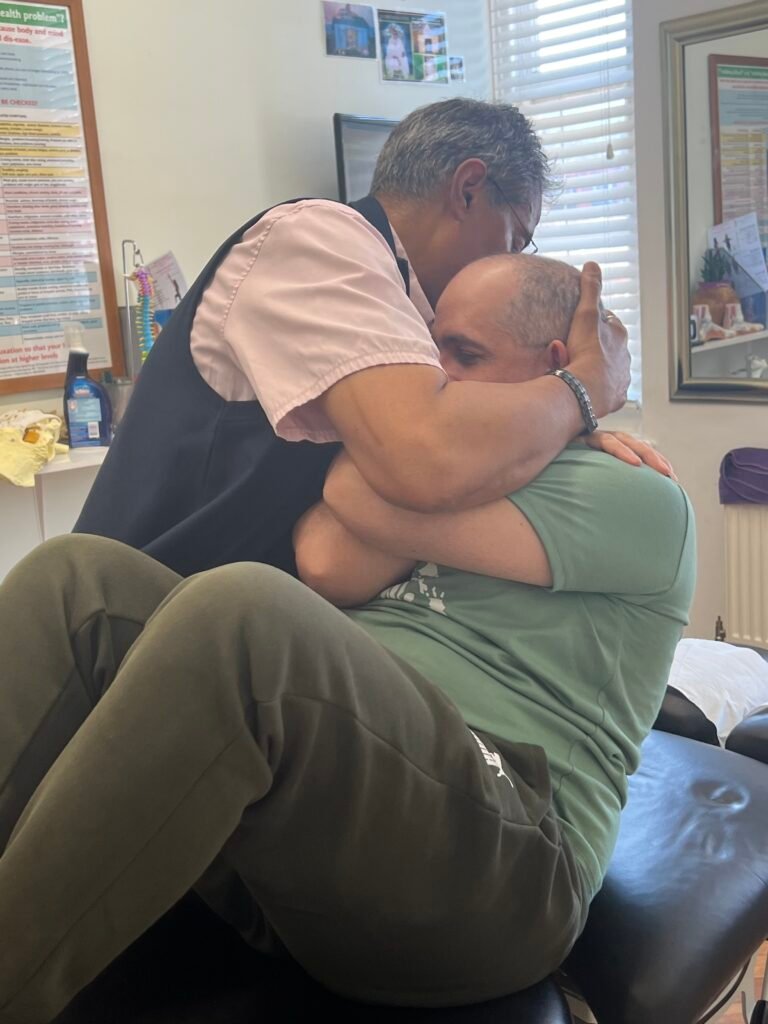
True sciatic pain can be exhausting. It often begins as an ache in the lower back or gluteal region before sending sharp, shooting, or burning sensations down the back of the leg, sometimes extending past the knee and into the foot and toes.
Sitting can quickly become uncomfortable, driving becomes a struggle, and finding a restful sleeping position feels almost impossible.
If you are experiencing radiating leg discomfort, an accurate clinical diagnosis is the first step towards lasting relief.
The sciatic pathway
The sciatic nerve is the longest and thickest nerve in the human body, formed by nerve roots originating from the lower lumbar spine (L4–L5) and sacrum (S1–S3). Symptoms arise when the nerve is compressed, stretched, or chemically irritated along its path:
When an intervertebral disc bulges outward, it can compress adjacent spinal nerve roots, sending radiating pain down the leg.
Stiff or misaligned lumbar facet joints can cause localised swelling and narrow the spaces where spinal nerves exit.
The sciatic nerve travels directly beneath—and in some individuals, through—the piriformis muscle in the pelvis. Chronic gluteal tightness can mechanically irritate the nerve.
Pelvic torsion can alter gait mechanics, placing abnormal traction on the sciatic nerve pathway.
During your £49 consultation, we carefully evaluate the health of your lower back and nerve pathways:
Straight Leg Raise (SLR), Bragard’s, and Slump tests evaluate sciatic mobility and localised nerve compression.
Testing calf and foot muscle strength alongside sensory testing across dermatomes to monitor nerve function.
Identifying underlying joint stiffness or pelvic rotation contributing to nerve irritation.
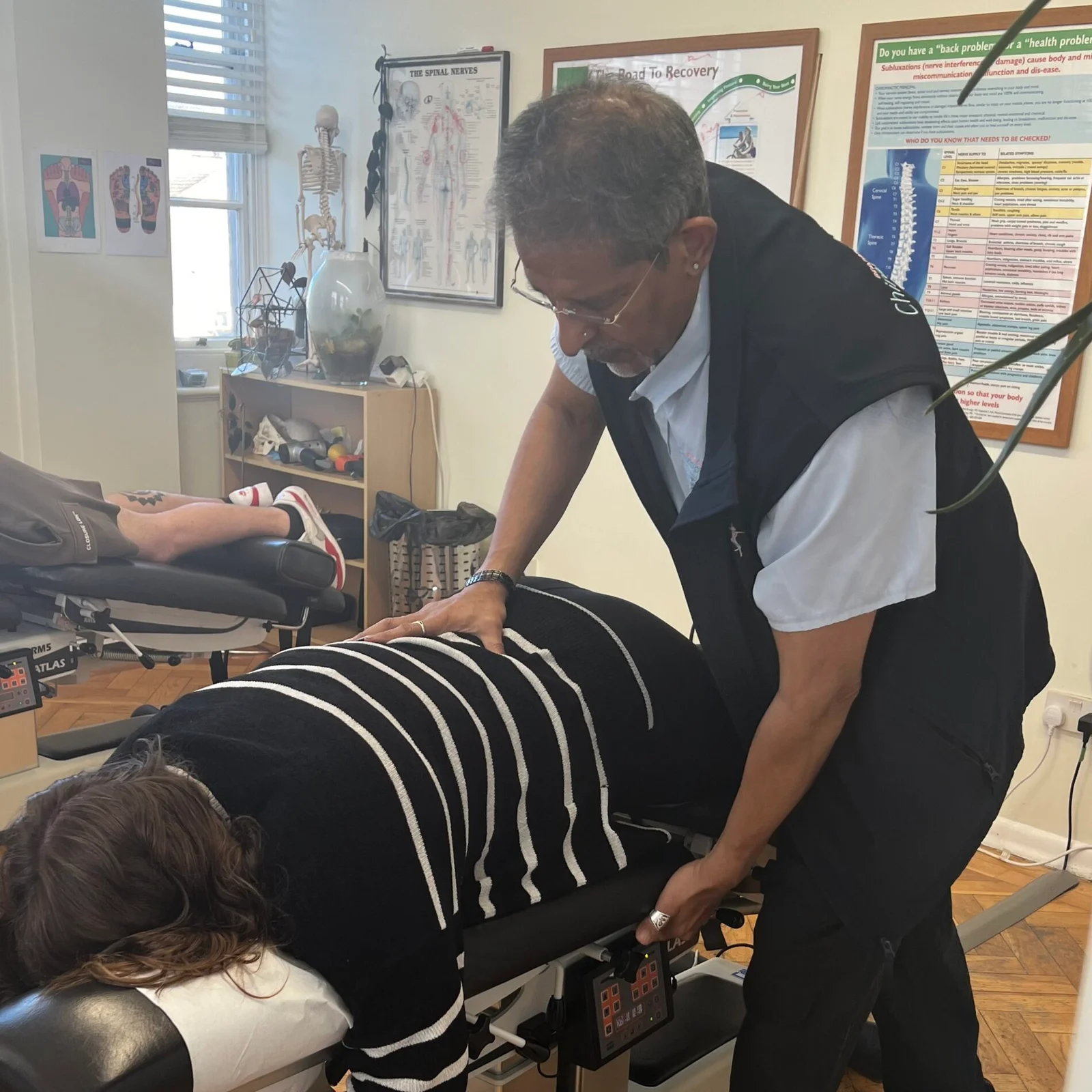
Our evidence-based approach aims to gently relieve mechanical pressure along the nerve pathway without aggressive surgery or heavy reliance on medication:
Creating movement in restricted lumbar segments to improve mechanical space around exiting nerve roots.
Balancing the sacroiliac joints to normalise weight distribution and gait.
Gentle rehabilitative movements designed to help the nerve glide smoothly through surrounding soft tissues.